
Helping students better understand the policies, rights, and responsibilities related to freedom of expression on campus.



Learn Your Rights
Hover or tap each spot on the map to learn about your rights at each campus location.
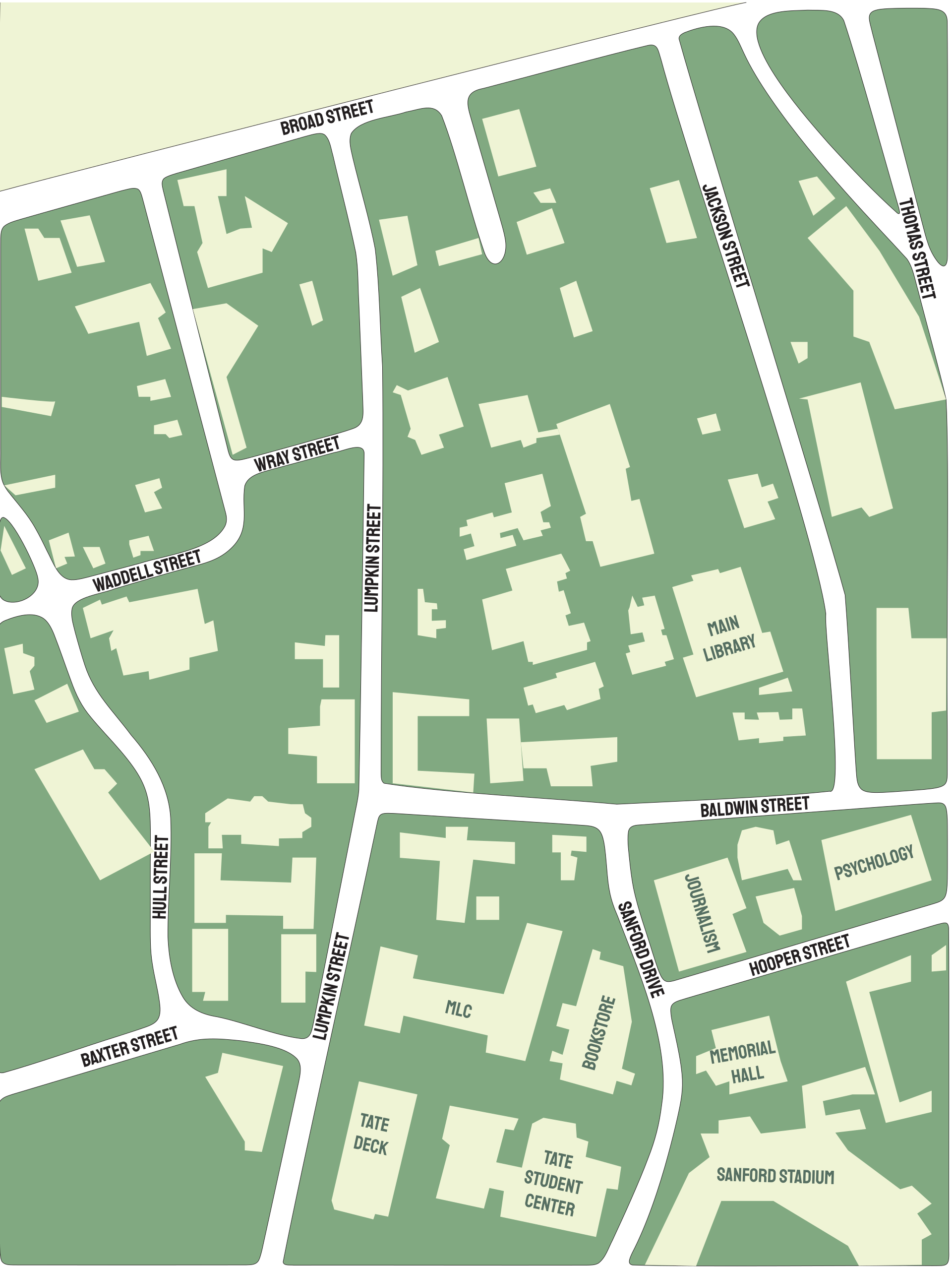
Arch — Purpose
- The First Amendment provides the right to freedom of expression, speech, and peaceful assembly.
- UGA’s Freedom of Expression policy ensures opportunities are provided on an equal basis, remaining content- and viewpoint-neutral, with guidelines that keep a safe, non-disruptive environment.
- Hate speech can offend, attack, threaten, or insult individuals or groups—but there is no general “hate speech” exception to the First Amendment. Public institutions (including UGA) cannot punish protected speech simply because it’s hateful.
Fountain — Definitions
- Designated Forums: high-traffic areas available for speeches, demonstrations, and events — Tate Plaza, Memorial Plaza, and Northwest Lawn.
- Expressive Activity: First-Amendment-protected activity including speeches, demonstrations, marches, protests, picketing, literature distribution, and signage.
- University Community: anyone enrolled at or employed by the University.
- Non-University-Affiliated Speakers: individuals or groups not part of the University Community.
- Spontaneous Expressive Activity: unplanned responses to events or news within 48 hours.
North West Lawn — Additional Provisions
- Written materials may be distributed person-to-person in outdoor, publicly accessible areas.
- Promotions must identify the University Community sponsor (individual or organization).
- Organizations/individuals are financially liable for damages or property destruction.
- All materials must be removed at the conclusion; the University isn’t responsible for items left behind.
Tate Plaza — Non-UGA Affiliates
- Non-University-Affiliated speakers may use only the Designated Forums, Monday–Friday, 8:00am–9:00pm, with a reservation.
Memorial Plaza — Expressive Activity
- University Community members may use any outdoor, publicly accessible campus areas for expressive activity without a reservation.
- Reservations for Designated Forums can be requested ≥48 hours in advance through the Associate VP for Student Affairs.
- Requests may be denied if a space is unavailable or cannot accommodate the event.
UGA Police — Public Safety
- UGA Police maintain ultimate discretion for campus safety and may end any activity if it threatens safety.
- A security fee may be charged if size/manner of audience requires personnel for safety.
- The University may modify or end expressive activity if it poses a threat to public health.
- The First Amendment provides the right to freedom of expression, speech, and peaceful assembly.
- UGA’s Freedom of Expression policy ensures opportunities are provided on an equal basis, remaining content- and viewpoint-neutral, with guidelines that keep a safe, non-disruptive environment.
- Hate speech can offend, attack, threaten, or insult individuals or groups—but there is no general “hate speech” exception to the First Amendment. Public institutions (including UGA) cannot punish protected speech simply because it’s hateful.
- Designated Forums: high-traffic areas available for speeches, demonstrations, and events — Tate Plaza, Memorial Plaza, and Northwest Lawn.
- Expressive Activity: First-Amendment-protected activity including speeches, demonstrations, marches, protests, picketing, literature distribution, and signage.
- University Community: anyone enrolled at or employed by the University.
- Non-University-Affiliated Speakers: individuals or groups not part of the University Community.
- Spontaneous Expressive Activity: unplanned responses to events or news within 48 hours.
- Written materials may be distributed person-to-person in outdoor, publicly accessible areas.
- Promotions must identify the University Community sponsor (individual or organization).
- Organizations/individuals are financially liable for damages or property destruction.
- All materials must be removed at the conclusion; the University isn’t responsible for items left behind.
- Non-University-Affiliated speakers may use only the Designated Forums, Monday–Friday, 8:00am–9:00pm, with a reservation.
- University Community members may use any outdoor, publicly accessible campus areas for expressive activity without a reservation.
- Reservations for Designated Forums can be requested ≥48 hours in advance through the Associate VP for Student Affairs.
- Requests may be denied if a space is unavailable or cannot accommodate the event.
- UGA Police maintain ultimate discretion for campus safety and may end any activity if it threatens safety.
- A security fee may be charged if size/manner of audience requires personnel for safety.
- The University may modify or end expressive activity if it poses a threat to public health.
INFO – QUICK GUIDE
- Freedom of expression practices are provided on an equal basis for all members of the University community.
- Expression includes any communicative activity protected by the First Amendment.
- University community members can use outdoor, publicly accessible spaces for expression without prior approval.
- Non-University affiliated speakers must use the designated forums for expressive activity.
- The University may modify or end any expressive activity that interferes with safety or University operations.
- For more information, refer to the University’s Freedom of Expression Policy and Student Handbook.
Hate Speech
Hate speech is speech that offends, threatens, or insults individuals or groups on the basis of race, color, religion, national origin, sexual orientation, disability, or other traits. Contrary to popular belief, hate speech is not itself an unprotected category of speech under the First Amendment. An individual could say something that constitutes hate speech and also constitutes unprotected speech (a “true threat” for instance), but an individual could also say something that constitutes hate speech and is protected under the First Amendment. As a result, hate speech is not often used as a category in policies addressing the First Amendment.
Learn more ↗
 GPT
GPT